How ICIEC is de-risking trade and investment in a fragmenting world

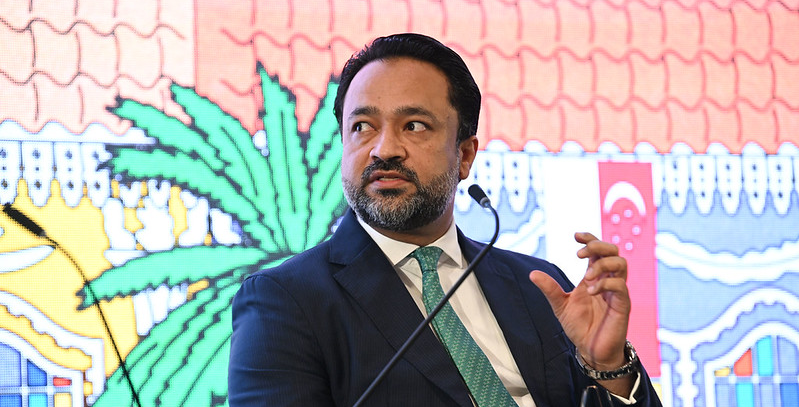
In this new Uxolo: In-Depth With episode, ICIEC CEO Dr Khalid Khalafalla is back to give us a closer look at how ICIEC is responding to rising risks and helping sustain capital flows into infrastructure and development projects during periods of geopolitical instability.
ICIEC
ICIEC is the export credit and investment insurer of the Islamic Development Bank (IsDB) Group, serving its 57 OIC member countries. Dr. Khalafalla became CEO in December 2024, so he is close to two years into the role. His argument is that ICIEC exists for moments like this one: "when the risk is heightened, it's not the time for us to shy away and close the door."
Key themes
Risk is broadening, not just rising
Since the last conversation in August 2025, two shocks have compounded each other: the US–Iran conflict, with its disruption around the Strait of Hormuz, and tariff-driven trade protectionism. Together they have pushed up inflation and squeezed developing countries' access to foreign currency. Investors still worry about sovereign non-payment and political violence, but currency transfer restrictions and supply chain disruption now sit alongside them. ICIEC's response is more forward-looking underwriting, looking at FX conditions, sector vulnerability and project resilience, backed by risk-based pricing and reinsurance.
Banks, ECAs and a multilateral on one railway
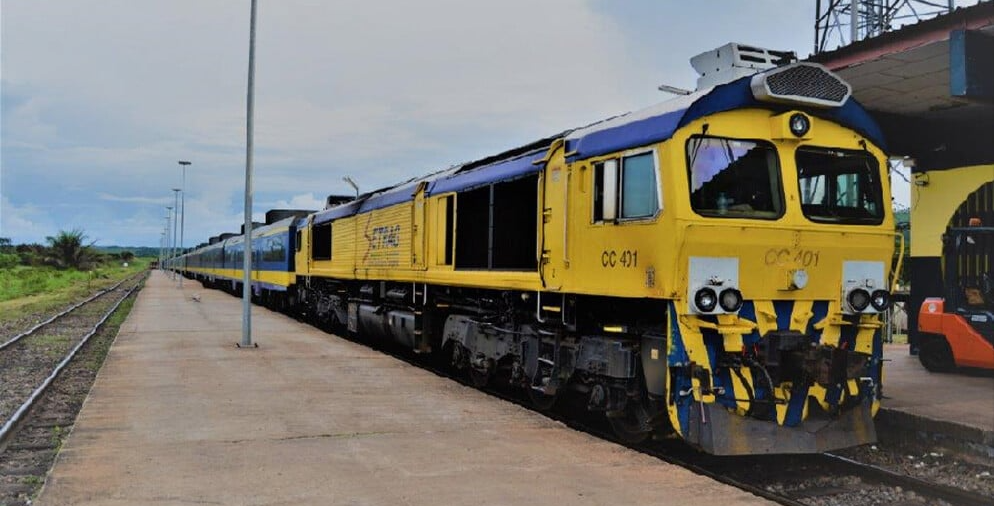
Dr. Khalafalla points to a Turkish railway project, financed at close to $2.5 billion, as a model. ICIEC provided €135 million of sovereign non-payment cover for a Murabaha facility arranged by MUFG. The bank financing was then repackaged into notes placed with European institutional investors, including pension funds, who would not have come in alone. A smaller Nigerian road project, at close to half a billion, showed the same pattern, with ICIEC mobilising substantial private reinsurance.
Trade within the OIC
Intra-OIC trade is about 20% of members' total trade against a 25% target. Roughly half of ICIEC's export credit cover since inception has supported it. He sees the strongest openings along the Central Asia–Azerbaijan–Türkiye Middle Corridor, between the Gulf and African economies in food security and energy infrastructure, and between Malaysia, Indonesia and the Gulf. The barriers are logistics, border procedures and regulatory harmonisation.
Mobilising capital without overloading balance sheets
ICIEC works with other IsDB Group entities through Member Country Partnership Strategies, which set out which needs each institution or the national budget should cover. Where regulatory frameworks such as PPP laws are weak, technical assistance comes first. ICIEC then makes projects bankable by removing political and commercial risk.
Benin: €500 million for the SDGs
Three European commercial banks provided the loan, with two layers of protection. The African Development Fund gave a first-loss guarantee on about 50% of principal, and ICIEC covered up to 95% through non-honouring of sovereign financial obligations insurance. The financing covers about one third of Benin's 2026 growth financing needs, at improved terms, for education, school feeding, electricity, drinking water and health.
Islamic finance and ESG
Dr. Khalafalla sees Islamic and conventional finance as complementary, not a zero-sum choice. Because Islamic finance is tied to the real economy, he sees it as a natural fit for sustainable finance. The Turkish deals combined Islamic structures with European conventional financing and ECA support.
Climate resilience
ICIEC has a climate change policy aligned with the IsDB Group, screens every project and has developed green instruments. Priorities include water security, renewables, transport and sustainable agriculture, with blended finance seen as essential to scale.
The 2026–2030 strategy
The new strategy focuses on scaling development impact through greater private capital mobilisation, stronger partnerships and reaching countries where ICIEC has done little business. Priority sectors are strategic infrastructure (energy and transport) and food security. Success will be measured by capital mobilised, trade and investment facilitated, SMEs and jobs supported, and economic resilience, not just volume insured.
One group
The biggest challenge is the gap between members' financing needs and the group's resources. Closer work with ICD, ITFC and the IsDB is "a necessity", not a luxury, and the mandate is to deliver at scale, with excellence, "as one group". By 2030 he wants measurable impact on trade connectivity, jobs and SME access to export markets.
Episode takeaway
The OIC doesn't lack opportunity. It lacks risk-bearing capacity at scale, and no single institution can supply it alone.
ICIEC's approach shows that when trade and investment are:
- Backed by insurers that stay engaged when risk is highest
- Structured so multilaterals, ECAs and commercial banks each take the layer they are best placed to carry
- Supported by enabling frameworks and technical assistance
- Measured by jobs, trade and resilience rather than premiums written
…it can turn sovereign risk into bankable risk, lower the cost of capital, and fund the schools, railways and power lines member countries need.
Risk doesn't vanish in a fragmenting world. It gets shared.
Access the previous conversation with Dr Khalid Khalafalla here: www.uxolo.com/articles/7340/20-minutes-with-Dr-Khallid-Khalafalla-ICIEC